
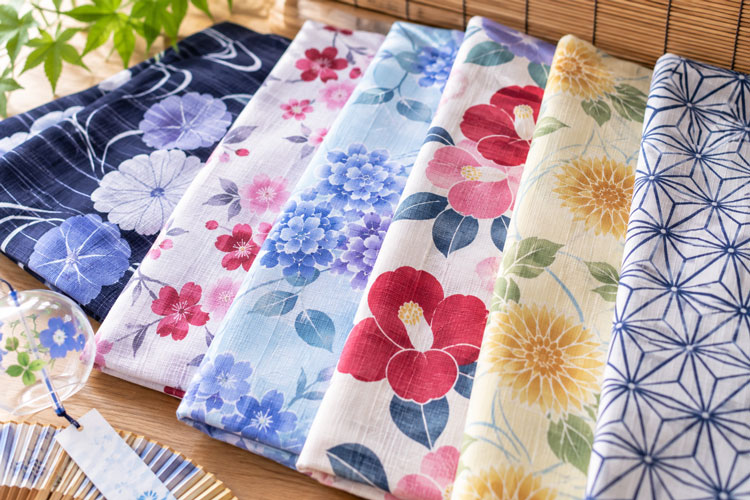
Did You Know Yukata Were Once Worn in the Bath!? The History of Yukata and How to Enjoy Them Today
The “yukata” is one of the quintessential symbols of Japanese summer. It’s commonly worn at summer festivals and fireworks displays, but few people who wear one actually know what a yukata originally was, or how it evolved into the garment we recognize today. Since it’s a piece of Japanese culture we encounter so casually, it’s worth learning a bit about its history. In this article, we’ll introduce the history of the yukata, ways to enjoy wearing one, and some etiquette to keep in mind while wearing it.
Originally Bathhouse Attire! The Surprising History of the Yukata
Today, the yukata is mostly worn on special occasions, but how was it originally used? Let’s take a look at its history below.
・Origins in the Heian Period
The yukata was originally created as clothing for aristocrats to wear while bathing. Since baths at the time were more like steam rooms (similar to a sauna), the garment was worn to prevent burns from the steam and to avoid exposing one’s bare body to others bathing nearby. Hemp was the main fabric used, and the garment from this era, called “yukatabira” (湯帷子), is actually the origin of the word “yukata.”
・Muromachi and Azuchi-Momoyama Periods
During the Muromachi and Azuchi-Momoyama periods, cotton became the primary material for yukata. Because cotton is breathable and absorbs sweat well, people began wearing it after bathing. Around this time, the yukata came to be called “minugui” (身拭い), rather than “tenugui” (a hand towel). It also began to be used as sleepwear, typically made from white cotton dyed with indigo.
・By the Edo Period, It Became Outdoor Wear as We Know It Today
In the Edo period, people began bathing nude, much like today. As bathing customs changed and public bathhouses (“furoya” or “sento”) became widespread, the yukata transformed into an “outdoor garment” that could be worn straight after a bath when stepping outside. The Tenpo Reforms, which issued an edict forbidding townspeople from wearing silk, also helped popularize the cotton yukata. In addition, it became fashionable during this vibrant era of Edo culture for people to wear matching yukata to bon dance festivals and cherry blossom viewing. Commoners even began imitating the stage costumes of kabuki actors, further spreading yukata culture throughout society.
・It Became Widespread Nationwide During the Meiji Period
By the Meiji period, the yukata had become firmly established as summer outerwear across the country. This was because cotton yukata—highly absorbent and breathable—suited Japan’s humid summers so well. The invention of a mass-production dyeing technique called “chusen” also contributed to the yukata’s widespread adoption. Chusen, also known as “hon-zome” (true dyeing), is a technique that allows multiple colors to be dyed at once. It made it possible to create beautiful color gradations and delicate bleeding effects, leading to the wide variety of colors and patterns seen in yukata today.
A Wealth of Designs, Perfect for Everyday Wear Too! Ways to Enjoy the Yukata
Now that we’ve seen how the yukata became so widespread, let’s look at the many ways to enjoy wearing one today.
・Wear One to a Festival or Event
Try wearing a yukata to a summer festival, bon dance, or fireworks display. Compared to a formal kimono, a yukata has far fewer rules for how it should be worn, and you can even learn to dress yourself with the help of the internet or a magazine. If you’d like to try it out first, you might consider renting a yukata from a rental service, which often includes professional dressing assistance.
・Try a Unique Design
Modern yukata come in an impressively wide range of designs—stripes, polka dots, and many patterns beyond the traditional classic motifs. You can even incorporate Western-style touches, such as lace collar inserts or pearl-decorated cords, for a more fashion-forward look.
・Wear One at Home
Just as it was once worn by commoners as everyday clothing, the yukata is a wonderfully cool and breathable garment. To help beat the summer heat, why not try wearing one as loungewear at home? It can even be fun to switch colors day by day—perhaps a crisp white yukata for a visually cooling effect, or a navy one, since insects tend to dislike the scent of the indigo dye.
Wear It Beautifully! Etiquette to Keep in Mind When Wearing a Yukata
If you’re going to the trouble of wearing a yukata, you’ll want your posture and movements to look just as elegant. Let’s go over some etiquette points to keep in mind while wearing one.
・Standing, Walking, and Using Stairs
When wearing a yukata, stand up straight with good posture. When walking, take slightly smaller steps than usual and walk with your legs a bit closer together, almost pigeon-toed. When going up or down stairs, gently lifting the hem with your right hand will help you avoid tripping and keep your movements graceful.
・Keep Movements Small and Graceful
In general, try to make all your movements smaller and more deliberate than usual. If you move around as you normally would, the collar and hem can gradually loosen and become disheveled. This is especially true on stairs—turning your body slightly to the side, rather than facing forward, helps you avoid spreading your legs too wide and keeps the yukata from coming undone.
・Watch Your Sleeve Pockets (“Tamoto”) While Eating
The “tamoto” refers to the pouch-like part beneath the sleeve of a yukata. When reaching for food, use your other hand to hold the tamoto back so it doesn’t get soiled. It’s also a good idea to sit with about a fist’s width of space away from the table, and to drape your napkin over your obi (sash) rather than your lap, to help keep your yukata clean.
The yukata may seem like something you casually spot at summer events, but it actually carries a surprisingly long history. And just as it was once worn as everyday clothing, it might be fun to wear one at home throughout the summer. The yukata tends to leave lasting memories—why not try wearing one next summer?
 中文 (台灣)
 한국어
한국어 日本語
日本語Comment ( 0 )
Trackbacks are closed.
No comments yet.